游戏人生
Economist explores human stories behind development_我的网站

一 | Renee 综合
昨天新西兰人在降雨天气中度过了圣诞节,今天节礼日(Boxing Day)能迎来阳光吗?答案是天气依然不美,很多地区仍将迎来恶劣天气。
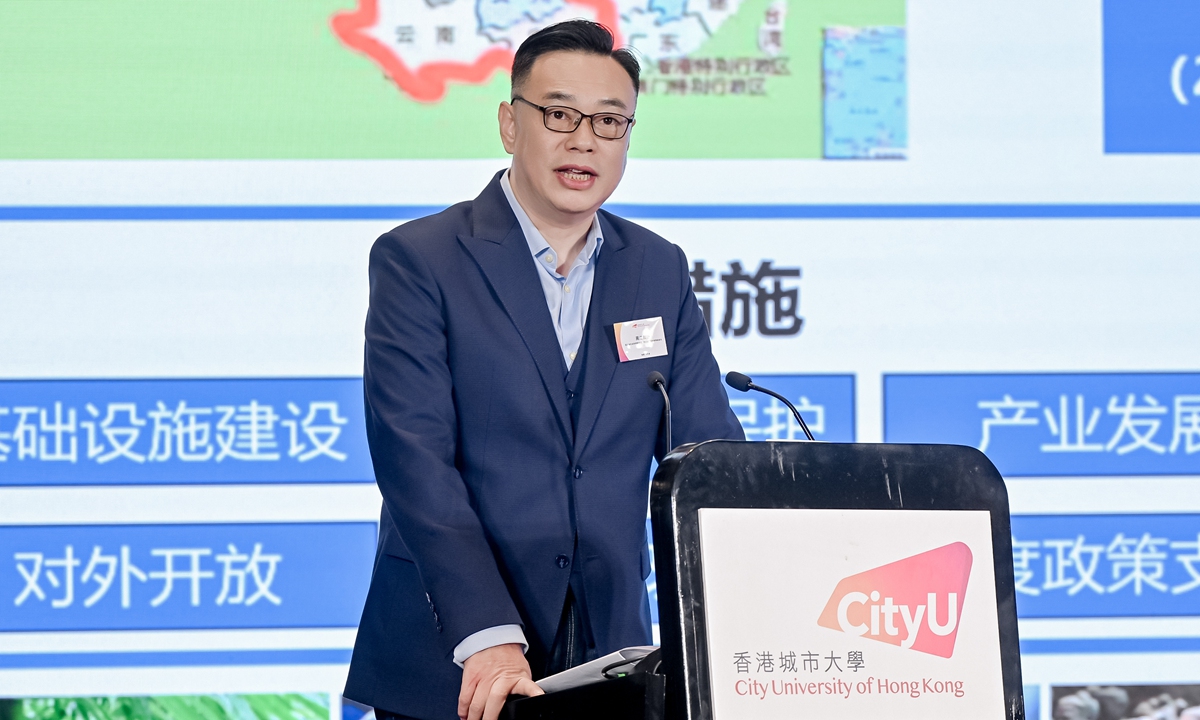
Zhou Jiang speaks at an event. Photo: Courtesy of Zhou Jiang
Zhou Jiang, a researcher at the Sichuan Academy of Social Sciences, has a favorite book:
White Deer Tableland or
Bai Lu Yuan by renowned writer Chen Zhongshi.
As vice president of the Regional Science Association of China (RSAC), Zhou told the Global Times that a lifetime of reading has profoundly shaped the way he sees and understands the world. It ultimately led him to a career in research and academia, where he teaches and pursues scholarly work.
Since earning his PhD in economics in 2000, he has devoted himself to the study of regional science and economics, a field that demands a constant crossing of disciplinary boundaries, drawing on the fields of geography, sociology, history, and ecology among others.
"Reading has kept alive my sense of curiosity and taught me to ask questions with patience and persistence: Where do disparities in regional development come from? How do policies affect different groups in society? And how can a region pursue both efficiency and equity so that development is not merely effective, but also imbued with a greater sense of humanity and warmth?" Zhou noted.
Founded in 1991, RSAC is a national academic society dedicated to advancing domestic and international academic exchange and cooperation, providing consulting services on spatial planning, urbanization, and regional development, and offering intellectual support for China's modernization drive.
The 57-year-old researcher noted that reading has empowered him in two distinct ways.
"The first is discernment. When confronted with a complex issue, I try not to settle for a simple conclusion. Instead, I make an effort to understand its broader context, how it has unfolded, and the perspectives of the different people involved," he said.
"The second is a sense of inner steadiness. Setbacks are an inevitable part of both life and work. Good books remind us that hardship is never ours alone to bear; countless people before us have faced circumstances more difficult than our own, made difficult choices, and found the strength to carry on. Reading cannot solve every problem for us, but it can help us remain calm when challenges arise, giving us the clarity and resilience that allow us not to panic or give up too easily," he said.
Historical depth
Each time Zhou returns to the White Deer Tableland, he finds something different in its pages.
"When I first read it as a young person, I was drawn primarily to the characters and the twists and turns of their lives. Later, as I began researching regional economics, I found myself paying closer attention to the changes in the land, the countryside, families and social order presented in the story. Now, approaching 60, I have come to appreciate more deeply the choices the characters make, the constraints they face, and the quiet perseverance they show amid the sweeping currents of their times," he said.
White Deer Tableland uses Bai Lu village in Northwest China's Shaanxi Province as a microcosm, tracing the feuds and intertwined fortunes of three generations of the Bai (literally meaning white) and Lu families. Through their stories, it captures more than half a century of sweeping historical change, from the final years of the Qing Dynasty (1644-1911) to the 1970s and 1980s. The novel won the Mao Dun Literature Prize, one of China's top literature awards, in 1997.
Zhou prefers literary works with historical depth and a keen eye for social change.
Regional economics may appear to be concerned with the spatial distribution of industries, population and resources, but at its heart, it is about how people live on a particular piece of land, and why some places flourish while others decline, he noted.
In this sense, literature and history are more than pastimes beyond professional research. They often help him understand the historical context, cultural traditions and social mentality that lie behind economic data, he said.
When reading novels, Zhou said that he often pays close attention to the relationship between people and the places they inhabit: How the land shapes the local character, how transportation transforms a region, and how shifts in industry reshape families and villages. Such details may not offer a direct conclusion, but they broaden a researcher's perspective. They also serve as a reminder that research should look beyond growth rates and statistical indicators to consider the sense of fulfillment experienced by ordinary people and the dignity of human beings.
Understanding ourselvesOnce, while tidying his study, he came across a book filled with notes he had scribbled in his early years. Among them was a question that particularly caught his attention: "In the face of sweeping changes in the times and profound social transformation, what can a person truly determine for himself?"
Looking at those words he had written in his youth was like coming face to face with the person he had been decades ago.
Reading is not simply the act of understanding a book; it is also a record of a person's own growth, he said. The same book can reveal something entirely different when read at different stages of life.
When we are young, we turn to books in search of answers; but when we become seasoned, we read more to understand life, to understand others, and ultimately, to better understand ourselves, Zhou said.
In this era of fragmented information, AI can help people access information quickly, organize materials, and gain a basic understanding of unfamiliar fields. Yet deep reading, Zhou said, allows people to see how a conclusion is reached — what evidence supports it, where its boundaries lie, and what alternative interpretations it may invite.
What truly shapes a person, after all, is not how much information they have browsed, but the words that have made them pause and reflect - and the words that have remained with them for many years, he added.
。
Advertise with us
北岛北部大部分地区今天都被大雨和强雷暴预警笼罩,预计直到午夜才会停止降雨。
天气预报机构MetService预报员Tuporo Marsters说,全国范围内降雨的缓解将是短暂的,下午北地(Northland)东部将再次出现阵雨,塔拉纳基(Taranaki)和霍克湾(Hawke’s Bay)等一些地区可能会有大雨。
从北地到丰盛湾(Bay of Plenty),包括度假胜地科罗曼德尔半岛(Coromandel Peninsula),都处于降雨监测下。
北地、丰盛湾、吉斯伯恩(Gisborne)和霍克湾从下午1点开始进入雷暴警报状态。

二 |
MetService警告说,猛烈雷暴可能会导致低洼地区出现强降雨,可能引发山洪暴发,并导致滑坡。
奥克兰今天的降雨预测。图片来源 / MetService
气温方面,整个北岛的气温预计将达到20度以上,其中内皮尔(Napier)和黑斯廷斯(Hastings)的气温最高,预计高达29度。
在南岛西海岸,该地区的气温可能在20度左右,而布伦海姆(Blenheim)的气温可能达到26度,奥塔哥中部可能达到25度。
昨天黑斯廷斯是全国最高气温的地区,达到33度左右,附近的内皮尔达到32摄氏度,吉斯伯恩达到28度。在南岛,Twizel也感受到了高温,达到了30度。凯库拉达到27度,基督城25度。
奥克兰未来7天天气预报如下:
更多全国地区天气可点击MetService官网查看。
相关阅读:
热!今年将成为新西兰有记录以来最热的三年之一
这个夏季假期,交通和天气好像都不那么妙……
厄尔尼诺来袭 新西兰今夏出现热带气旋的风险有多大?
炎热干燥!今年夏天新西兰的气温或将飙升至39度
厄尔尼诺现象来了!几周之内,新西兰气候会发生怎样的巨大变化?
厄尔尼诺来袭 2024或成史上最热一年
注:本文为编译/原创,欢迎转发分享;但严禁复制等未经授权的非法使用。

三 | 违反上述声明者,本网将追究其相关法律责任。

四 | 使用授权请联系[email protected]。
chineseherald.co.nz All Rights Reserved 版权所有
(责编:twinkle)
来源 -
相关内容
北部开始下雨了 奥克兰的圣诞节可能有阵雨
今天奥克兰高速接连车祸 一特斯拉撞毁
新西兰外长Winston Peters:不会驱逐俄罗斯大使
爆笑!新西兰女财长再发带色口误!网友:开车开到飞起来……
热!今年将成为新西兰有记录以来最热的三年之一
突发!奥克兰这座火山发生火灾!3男子纵火被捕
新西兰政府发布“迷你预算案”!取消这些福利!这类华人迎来利好
新西兰副总理兼外长对中国甘肃地震表示慰问。
Current article:http://v6b.kuaibenfanzhuakainenpimiuca.buzz/n9va4m/20260826/4247.html
Published on:00:50:29


